Arizona's Brewer Keeps Moving to the White
Arizona's SB1070 required police to check the immigration status of anyone they 'reasonably suspected' was undocumented. In Arizona, that means brown.

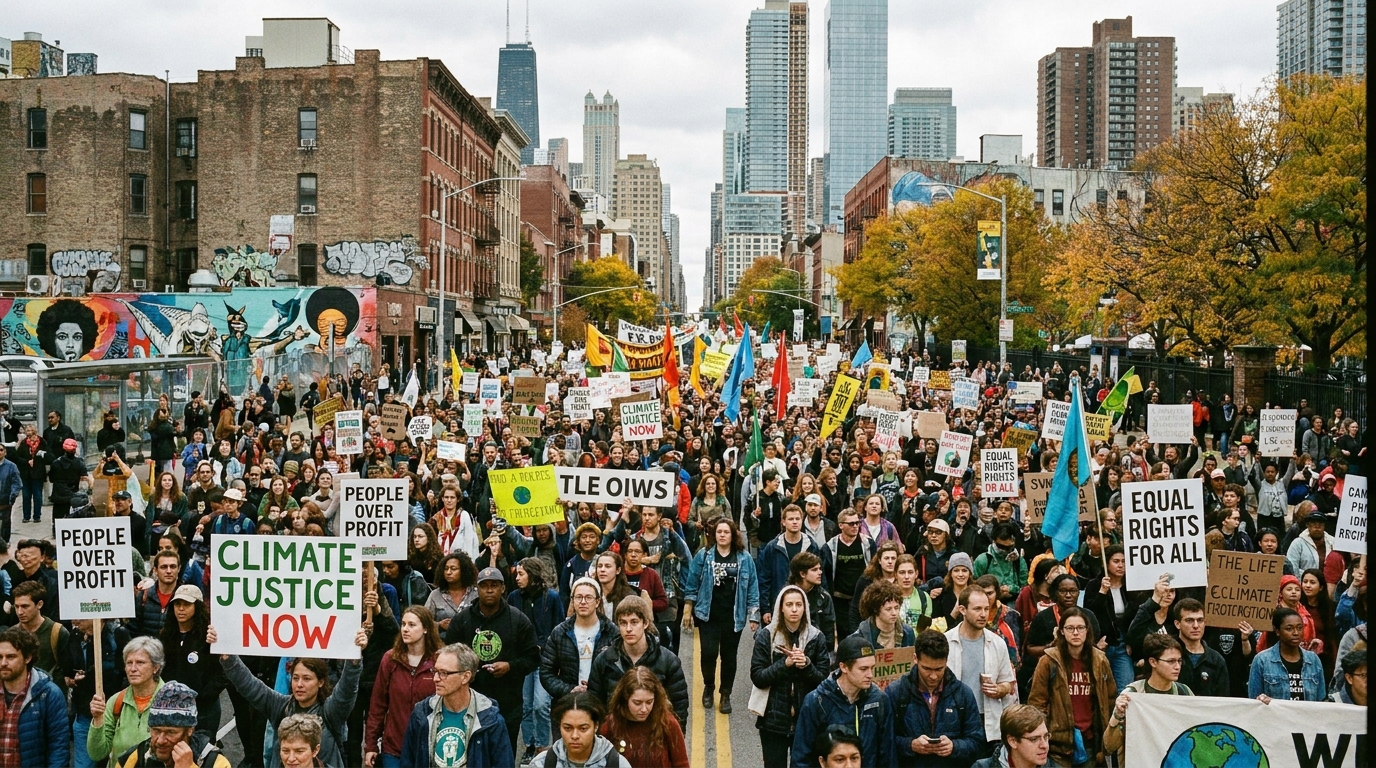
Arizona Governor Jan Brewer signed SB1070 on April 23, 2010. The Support Our Law Enforcement and Safe Neighborhoods Act - that is what it was officially called - required state and local police to determine the immigration status of any person they had “reasonable suspicion” to believe was in the country without authorization. It made being undocumented a state crime as well as a federal one. It allowed police to arrest individuals without a warrant if there was probable cause to believe they had committed a deportable offense.
The civil rights community called it a racial profiling law. The supporters called it a necessary response to federal inaction on border security. Both descriptions are accurate.
What “Reasonable Suspicion” Looks Like
The phrase “reasonable suspicion” does the heaviest political lifting in SB1070. Its defenders said it was a neutral legal standard with no racial component. Its critics - including, eventually, portions of the Supreme Court - noted that in Arizona in 2010, the profile of a person a police officer might “reasonably suspect” of being undocumented was, in practice, a profile of a brown person speaking Spanish.
Arizona has a Latino population of approximately 30 percent. Most of them are U.S. citizens or legal permanent residents. Under SB1070, any of them could be stopped and required to produce documentation proving their status because a police officer decided their appearance warranted a check. The law created a practical requirement for Latinos in Arizona to carry proof of citizenship in a way that no other demographic in the state faced.
The ACLU and other civil rights organizations filed lawsuits within days of the law’s signing. The federal government filed its own lawsuit, arguing that immigration enforcement is a federal responsibility and that Arizona’s law conflicted with federal law.
The Boycott
The national response to SB1070 included an economic boycott of Arizona that was broader and faster than almost any similar campaign in recent memory. Major corporations moved events out of the state. Several cities - Los Angeles, San Francisco, Boston - passed resolutions refusing to do business with Arizona. Musicians canceled concerts. The Major League Baseball players’ union publicly opposed holding the 2011 All-Star Game in Arizona (though the game went ahead as scheduled).
The boycott reflected something beyond immigration politics: a broader discomfort with a law that many Americans, including many white Americans, recognized as racial profiling codified into statute. The opposition was not unanimous, but it was visible and economically significant.
The Supreme Court and What Survived
The Supreme Court heard challenges to SB1070 in 2012. In Arizona v. United States, the Court struck down three of the four provisions that were challenged - including the provision making it a crime to be undocumented under state law and the provision allowing warrantless arrests based on probable cause of deportability.
The Court allowed the “show me your papers” provision - the requirement that police check status when they have reasonable suspicion - to go into effect, subject to future challenges based on how it was actually implemented.
The practical effect was that the most aggressive provisions were struck down, but the core mechanism of suspicion-based status checks survived. Which is to say: the law was defanged but not killed, and the policy intent - making Arizona uncomfortable enough that undocumented immigrants would “self-deport” - remained legible in what was left.
What It Set in Motion
SB1070 became a template. Other states - Georgia, Alabama, South Carolina - passed similar legislation in the years following. The movement for state-level immigration enforcement gained momentum, alongside federal immigration enforcement that was expanding under the Obama administration.
The law also accelerated political organizing in Arizona’s Latino community. Voter registration drives increased. Young DREAM activists became more visible. The county sheriff Joe Arpaio, who had been the most aggressive local enforcer of immigration laws in the country, eventually faced federal oversight and then electoral defeat.
None of that reversed what the law did to the experience of being brown in Arizona between 2010 and 2012. The period is documented in oral histories collected by civil rights organizations and immigration researchers. What those histories describe is a specific kind of fear - not the abstract fear of policy, but the practical fear of a traffic stop.
That fear was the point of the law. It worked as intended.