Yucatan's Double Ban: Gay Marriage and Abortion
As Mexico City prepared to legalize same-sex marriage, Yucatan amended its constitution to prohibit it and restrict abortion - a reminder that Mexico is not one country.

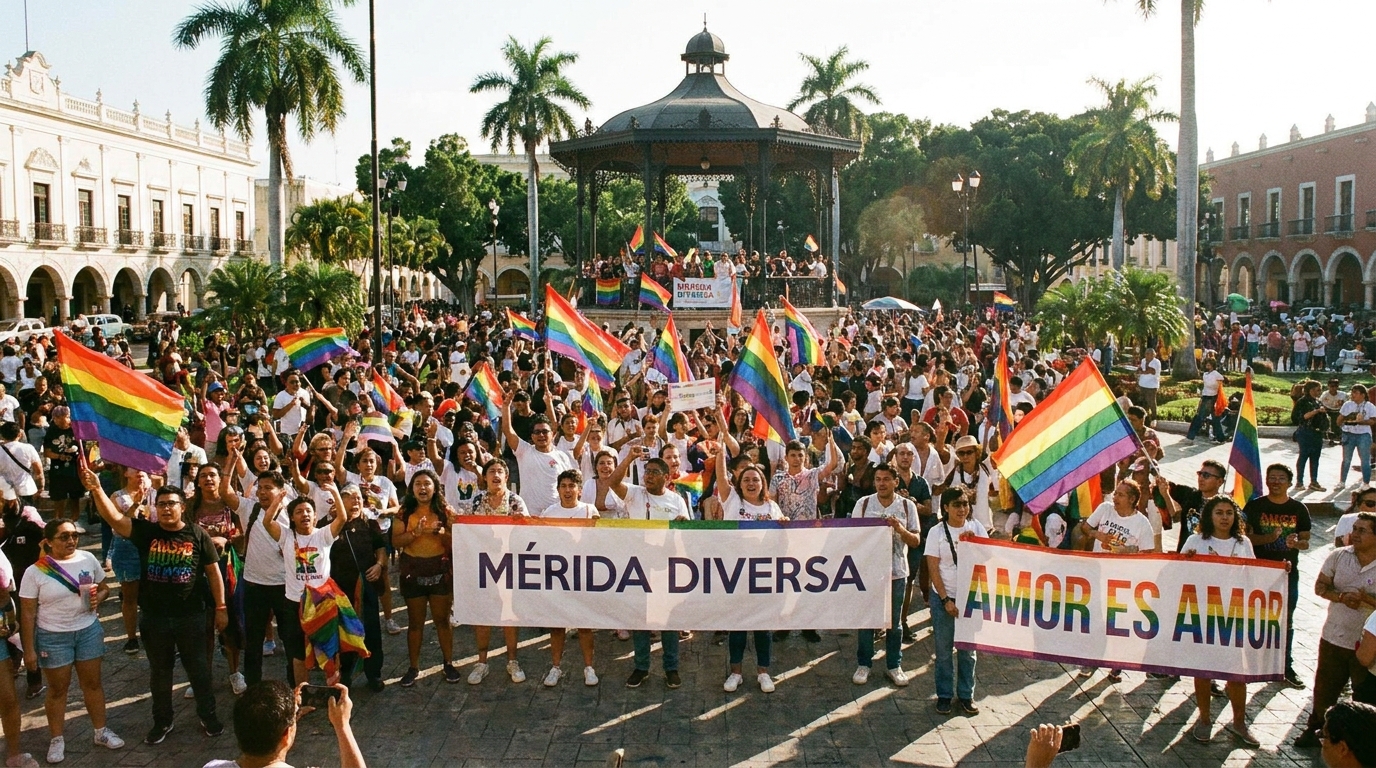
In July 2009, the state legislature of Yucatan amended the state constitution to define marriage explicitly as a union between a man and a woman, and to add protections for life from the moment of conception - effectively restricting abortion access beyond what federal law would have allowed. The vote passed with support from the PAN (National Action Party) and some PRI legislators.
This happened approximately six months before Mexico City’s legislature voted to legalize same-sex marriage.
Mexico is a federal republic. It is also, in practice, many different countries depending on which state you are in and which political party controls it.
What the Yucatan Amendment Did
The constitutional change defined marriage as a heterosexual institution at the state level, which created a legal conflict with Mexico City couples who had been married in the capital and then moved or traveled to Yucatan. More practically, it signaled to LGBTQ Yucatecans what their state government thought of their relationships.
The life-from-conception language was added in the same legislative session. Abortion had never been broadly legal in Yucatan - like most Mexican states, it allowed abortion only in limited circumstances like rape - but the constitutional language created a framework that could be used to further restrict even those exceptions.
Both measures were supported by the Catholic Church hierarchy in Yucatan, which had been active in lobbying state legislators. The Church’s political influence in Mexico’s interior states, particularly in the Yucatan Peninsula, remains significant in ways that differ sharply from Mexico City’s secular political culture.
Mexico City as a Different Universe
By December 2009, Mexico City’s Asamblea Legislativa - the city’s legislative body, which has significant autonomy - voted to legalize same-sex marriage. The law took effect in March 2010. Mexico City became the first jurisdiction in Latin America to legalize same-sex marriage.
The contrast with Yucatan, which had moved in the opposite direction six months earlier, illustrated something important about Mexican federalism: state governments have substantial power to set social policy, and the political culture of Mexico City - secular, left-leaning, PAN-dominated only in isolated neighborhoods - is essentially a foreign country relative to states like Yucatan, Jalisco, or Guanajuato.
LGBTQ Mexicans Between Two Mexicos
For LGBTQ Mexicans in conservative states, the Yucatan constitutional change was not an abstraction. It confirmed that the rights available to a gay couple in Mexico City - legal marriage, hospital visitation rights, inheritance, adoption - were not available to them at home. Mexican same-sex couples could be legally married in the capital and legally unrecognized in the state where they lived.
The Mexican Supreme Court would later rule that same-sex marriages performed in states with legal recognition must be recognized nationwide, which complicated but did not fully resolve this situation.
What the Yucatan vote could not change: the existence of LGBTQ Yucatecans, their families, their communities, their presence in Merida and across the peninsula. Laws that define marriage do not define who loves whom.
The U.S. Connection
For U.S. Latinos with roots in the Yucatan peninsula, this debate had specific resonance. The Yucatec Maya and mestizo communities of the peninsula have significant diaspora populations in California, Texas, and Florida. Families with relatives in both countries navigated these legal differences as a practical matter - a gay cousin in Los Angeles legally married in California, unable to bring a spouse to the family home in Merida with legal recognition.
That navigation continues. Mexico federally legalized same-sex marriage in all states through a Supreme Court ruling in 2021. The path there was longer than it needed to be, and the Yucatan amendment of 2009 was one of the markers along the road not taken.