Add This to Fujimori's Crimes: Mass Sterilizations
Peru's former dictator ran a government program that sterilized over 300,000 women - mostly indigenous, mostly poor, mostly without consent.

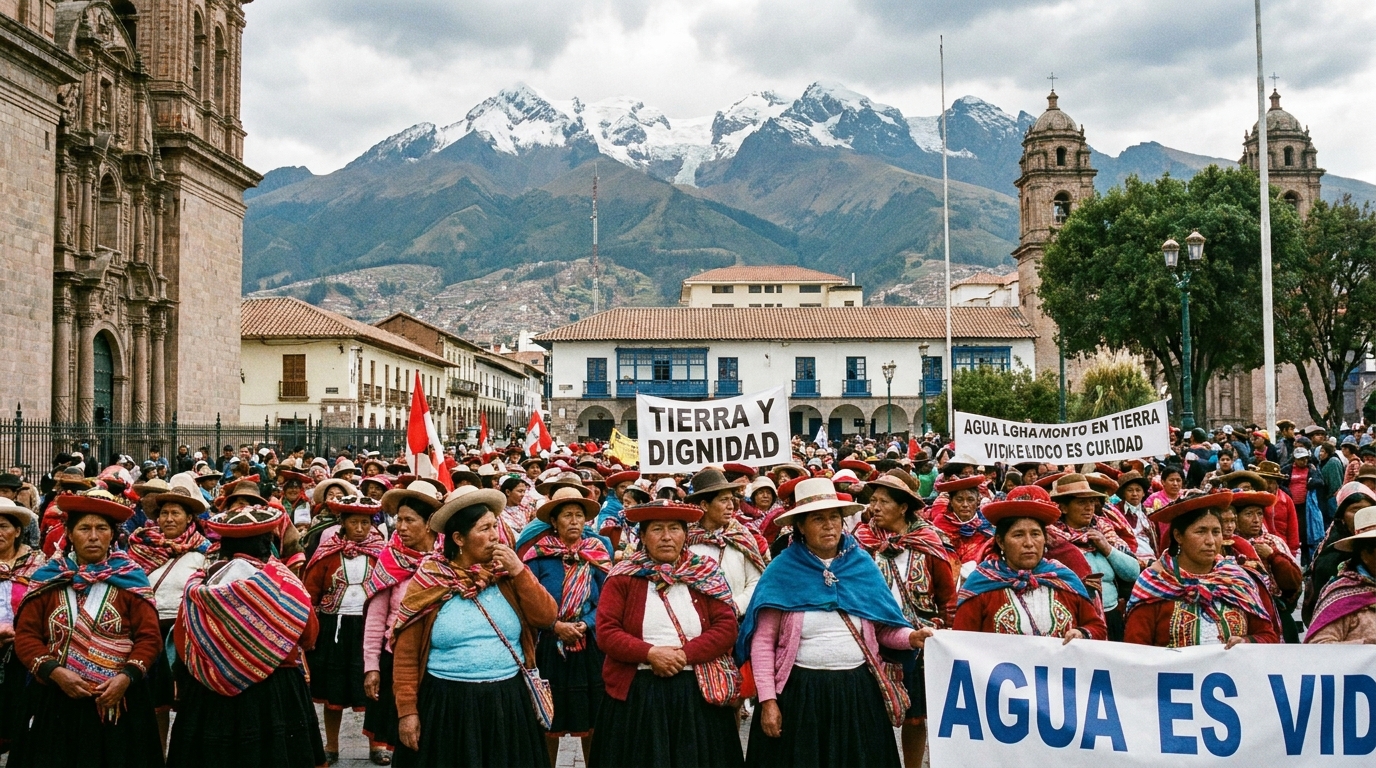
Alberto Fujimori, Peru’s president from 1990 to 2000, was convicted in 2009 on charges of human rights violations - specifically for ordering the murder and forced disappearance of civilians by military death squads in the early 1990s. He was sentenced to 25 years in prison.
What received far less attention in the international press coverage of that conviction: the Programa de Salud Reproductiva y Planificacion Familiar, the government’s family planning program, which between 1996 and 2000 oversaw the coerced or forced sterilization of an estimated 300,000 women and approximately 22,000 men - almost all of them indigenous, almost all of them poor, almost all of them Quechua or Aymara speakers from the rural highlands and Amazon regions of Peru.
How the Program Worked
The family planning program was initially presented to international donors - including USAID and UNFPA - as a voluntary initiative to expand reproductive healthcare access in underserved Peruvian communities. In practice, it operated on a quota system. Ministry of Health officials assigned doctors and health workers numerical targets for sterilizations. Those who did not meet their quotas risked salary cuts, transfers to less desirable postings, or dismissal.
To meet quotas, health workers employed a range of tactics that ranged from incomplete disclosure about the permanent nature of the procedure to outright coercion. Women were told the sterilization was reversible. Women were told the procedure was required before they could receive other healthcare. Women were offered food packages to consent. Women were sterilized while under anesthesia for other procedures without being informed.
The women most affected were rural, indigenous, Spanish-limited, and poor. They had the least ability to refuse medical authority, the least access to legal recourse, and the least visibility in the Lima-based press.
The Numbers and Their Human Weight
Three hundred thousand is a number that requires translation into the particular. It means thousands of specific women who had been told, by a doctor in a government clinic, that something permanent was going to happen to their bodies. Many of them wanted more children. Many of them were in their twenties. None of them consented to a policy that was, in practice, a government decision that certain kinds of Peruvian women should not reproduce.
The racial dimension is not subtle. The program operated overwhelmingly in communities of indigenous Quechua and Aymara speakers, the poorest and most politically marginalized Peruvians, the communities with the least ability to resist state authority. The policy replicated, through modern bureaucratic machinery, the logic of every colonial project that decided indigenous reproduction was a problem to be managed.
Why Fujimori’s Sterilization Program Was Not In His Conviction
The 2009 conviction that landed Fujimori in prison covered the crimes committed by the Grupo Colina death squad - targeted killings of civilians accused of being terrorists. The sterilization program was investigated by a congressional commission but never resulted in criminal charges against Fujimori or his health ministers.
The reasons are instructive. Coerced sterilization is harder to prosecute than murder. The victims are alive. The perpetrators claim good intentions - they were trying to help women with family planning. The documentation is bureaucratic rather than violent. The harm, though profound, does not produce bodies.
More practically: the sterilization program had international support and funding. USAID money flowed into Peru’s reproductive health programs during the Fujimori years. Pursuing criminal accountability would have required asking uncomfortable questions about which international actors knew what and when.
The Victims’ Fight for Justice
Peruvian women who were forcibly sterilized under the Fujimori program have been seeking criminal accountability for over two decades. Cases have been opened, investigated, closed, and reopened multiple times. As of the early 2020s, a criminal investigation was still ongoing in Peru, focused on Fujimori and three former health ministers.
The Inter-American Court of Human Rights has heard cases related to the sterilization program. Peruvian civil society organizations have documented survivor testimonies. Women have traveled from remote highland communities to Lima to testify and demand justice.
They are still waiting. The waiting is itself a form of the injustice.