Elvira Arellano: The Face of Undocumented America
A Mexican woman refused to leave a Chicago church and in doing so became the most visible face of a broken immigration system.

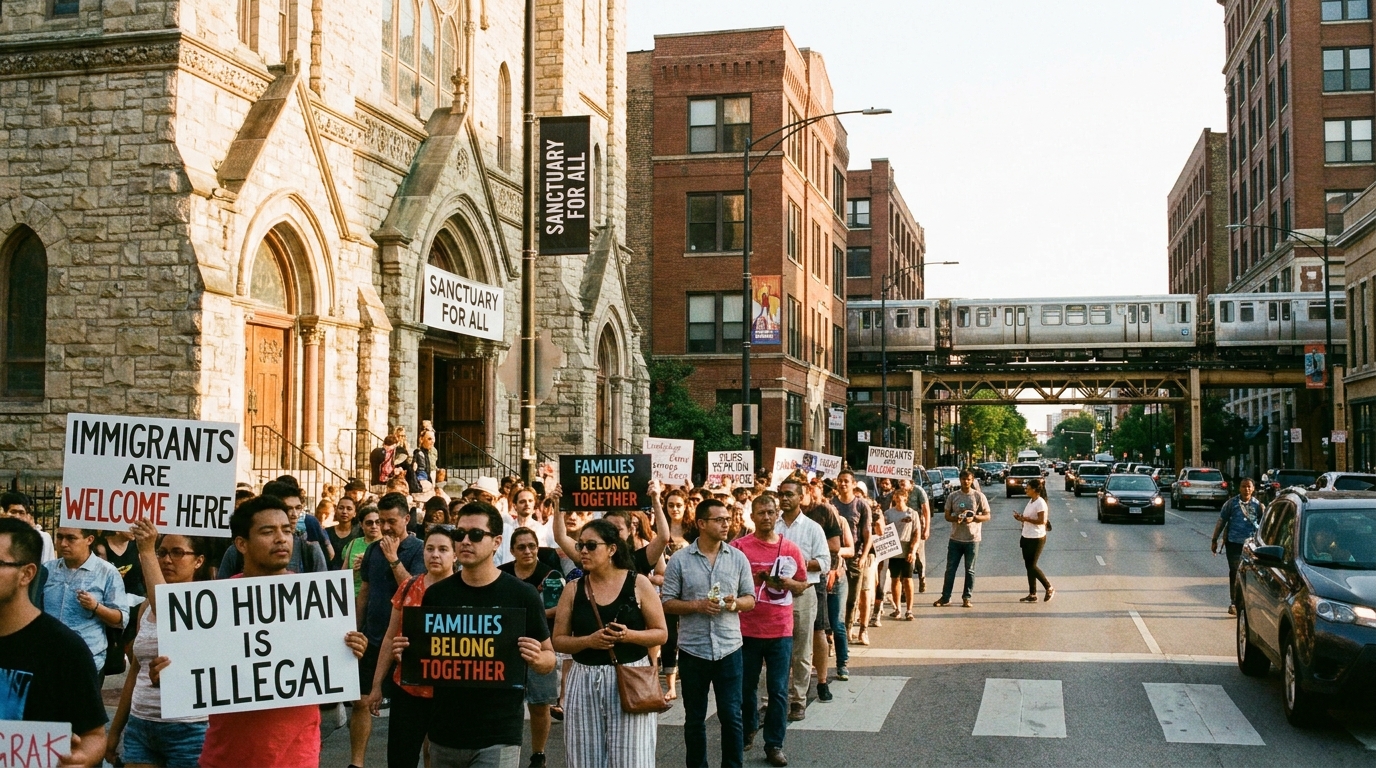
On August 15, 2006, Elvira Arellano walked into Adalberto United Methodist Church on Chicago’s Humboldt Park neighborhood and did not come out for a year. She had a deportation order. She had an eight-year-old son named Saul, who was born in the United States and was an American citizen. She made a choice that is described, depending on who you ask, as brave, illegal, illegal-but-understandable, or simply what any mother would do.
The immigration enforcement system that produced her deportation order is never described as broken. It simply operates as designed.
How She Got There
Elvira Arellano came to the United States from Michoacan, Mexico in the late 1990s. She was arrested twice for using false documents to obtain work - first in 2002 during a sweep of O’Hare International Airport that arrested hundreds of workers. She was convicted, served time, and was ordered deported. She stayed. She had Saul. She had built a life.
When immigration authorities came for her again in August 2006, she was facing a final deportation order. The choice before her was not complicated in legal terms: comply or resist. She chose resistance, and chose to make it public.
The church offered sanctuary. The pastor, the Reverend Walter Coleman, understood what that would mean - federal agents have generally respected the informal tradition of not entering houses of worship to make arrests, though that tradition has never been law. Elvira stayed inside. Saul went to school. She gave interviews. She became, briefly but unmistakably, the face of the undocumented immigration debate.
The Argument She Made
Elvira Arellano made a specific argument, and it is worth taking seriously: the United States cannot simultaneously grant citizenship to children born on its soil and then deport the parents of those children without acknowledging that it is doing something morally and practically incoherent. Saul was American. She was his mother. Separating them was not a bureaucratic inevitability - it was a policy choice.
This argument made her politically inconvenient in ways that went beyond the usual anti-immigrant hostility. It forced the question of what birthright citizenship means when it creates families that the government then treats as deportable. It is a question that U.S. immigration law does not answer cleanly, because the law was not designed to answer it.
Her supporters organized nationally. Her case became a reference point in the immigration reform debate of 2006-2007, a period when comprehensive immigration reform came close to passing the Senate before collapsing. Her face appeared on protest signs in cities across the country.
After the Church
In August 2007, Elvira Arellano left the church to speak at an immigration rally in Los Angeles. She was arrested within hours of arriving in California. She was deported to Mexico. Saul, her American son, remained in the United States, cared for by church members and supporters.
The immigration rights movement continued organizing. The comprehensive immigration reform bill did not pass. Enforcement continued. Elvira’s specific case became history, which is to say it became something people referenced in arguments rather than something with continuing consequences for a real woman and her real child.
It has continuing consequences for real women and their real children.
What It Means
The Elvira Arellano case is cited whenever someone wants to make immigration enforcement seem cruel, and cited whenever someone else wants to insist that laws exist for a reason and must be followed. Both uses treat her as a symbol rather than a person, which is itself a form of the problem.
What her case actually demonstrates is that U.S. immigration law produces situations that most Americans, if they thought through the specific details, would find difficult to defend. A child who is an American citizen, whose only country is the United States, watching his mother be taken away. The law says this is correct. The law may need to be changed.
Elvira Arellano did not ask permission to have that opinion. She walked into a church and said it out loud for a year, with her son watching.
That is what undocumented activism looks like when someone decides the risk is worth it.