Cuba Is Paradise on Earth, Says One Paper. Others Disagree.
When a Cuban state newspaper called the island paradise on earth, the responses from the diaspora were sharp, funny, and occasionally heartbreaking.

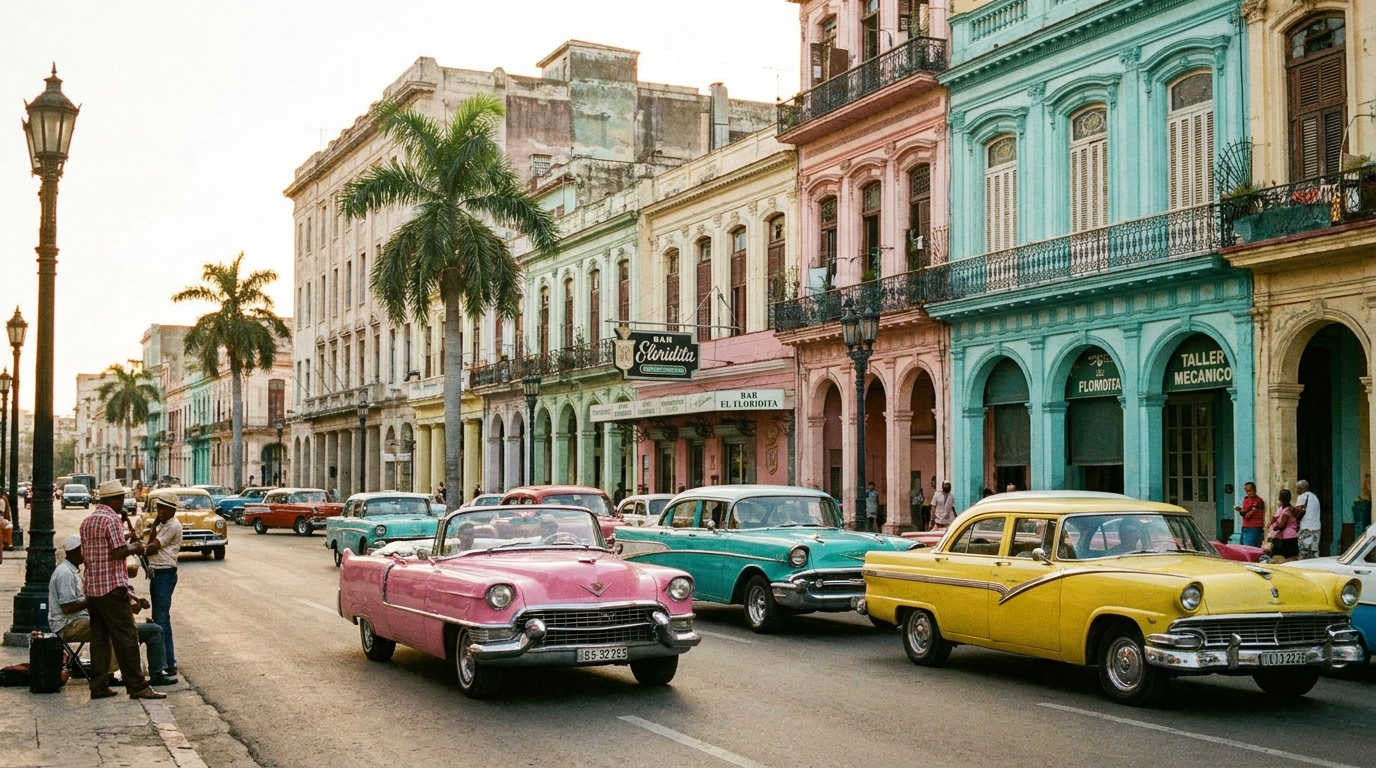
Granma, the official newspaper of the Cuban Communist Party, published something in the fall of 2005 that described Cuba as “paradise on earth.” The exact phrasing has circulated in various forms - it may have been an editorial, a headline, a quotation from an official. What matters less than the specific attribution is the cultural moment the phrase represented: the Cuban government, as it had done since 1959, insisting that its version of the island was the truth and that other versions were imperialist propaganda.
The Cuban diaspora - concentrated in Miami but spread across the United States, Spain, and Latin America - had several responses, most of them unfit for family publications.
Two Versions of Paradise
The Cuba of official state media is a country of full literacy, universal healthcare, tropical beauty, and revolutionary achievement. It is a country that survived the U.S. embargo through solidarity, ingenuity, and ideological commitment. It is a country where people are poor but equal, lacking material abundance but spiritually rich with collective purpose.
The Cuba of the exile community is a country where political dissidents are imprisoned, where the internet is restricted, where the average monthly salary in 2005 was the equivalent of approximately $15, where the economy functions on two currencies simultaneously (pesos and convertible pesos, with the latter accessible primarily to people with family abroad who send remittances), and where the gap between the official story and the lived experience is so wide that people build homemade rafts and trust themselves to ninety miles of open ocean rather than stay.
Both of these are real things. They are describing the same country.
What Gets Left Out
The Western left and the U.S. Cuban exile community share a tendency to flatten Cuba into their respective preferred narratives. For the left, Cuba is the valiant resistance to U.S. imperial bullying - which it is, in part, and that part is worth acknowledging. The U.S. trade embargo has caused real suffering and has failed completely as policy. The U.S. has funded and harbored groups that have attacked Cuba with violence. These are facts.
For the exile community, Cuba is Communism as pure political evil - which it also is, in part. The Castro government tortured and imprisoned political opponents. It drove a professional class into exile through property seizure and political persecution. It made certain kinds of thought criminal. These are also facts.
What neither narrative accommodates well: ordinary Cubans who are neither dissidents nor true believers, who live complicated lives in a complicated country, who love parts of their culture and hate parts of their government and miss relatives in Miami and are worried about their kids’ futures and want good things for Cuba regardless of whether those good things come through the current government or a different one.
The Diaspora’s Relationship with the Truth
The Cuban-American relationship with Cuba is among the most psychologically complex in the immigrant diaspora experience. Many families have not seen relatives in Cuba for decades. The Cuba they carry is a memory of a place that no longer exists - the pre-revolutionary Cuba of their parents and grandparents, filtered through fifty years of distance, political urgency, and grief.
When a Cuban state newspaper calls the island paradise, it provokes something raw: the reminder that the country they lost is being claimed by the system that took it from them. The fury is understandable. It is also, sometimes, a barrier to the more nuanced view that might serve Cuba’s future better.
The Question That Matters
The question is not whether Cuba is paradise or not. No country is paradise, and any country whose state media calls itself paradise is telling you something about how it needs to manage perception rather than reality.
The question is what happens to Cuba after the current political structure ends, and whether the Cuban diaspora - with its money, its professional expertise, its investment capacity - will be a resource for the country’s transformation or a political force that insists on its own version of the past.
Paradise, in the meantime, is what you make of wherever you actually are. Most Cubans, on both sides of the water, have been doing exactly that for sixty-plus years.