4:50 pm By Maegan La Mala · arizona|Immigration|Justice · No Comments
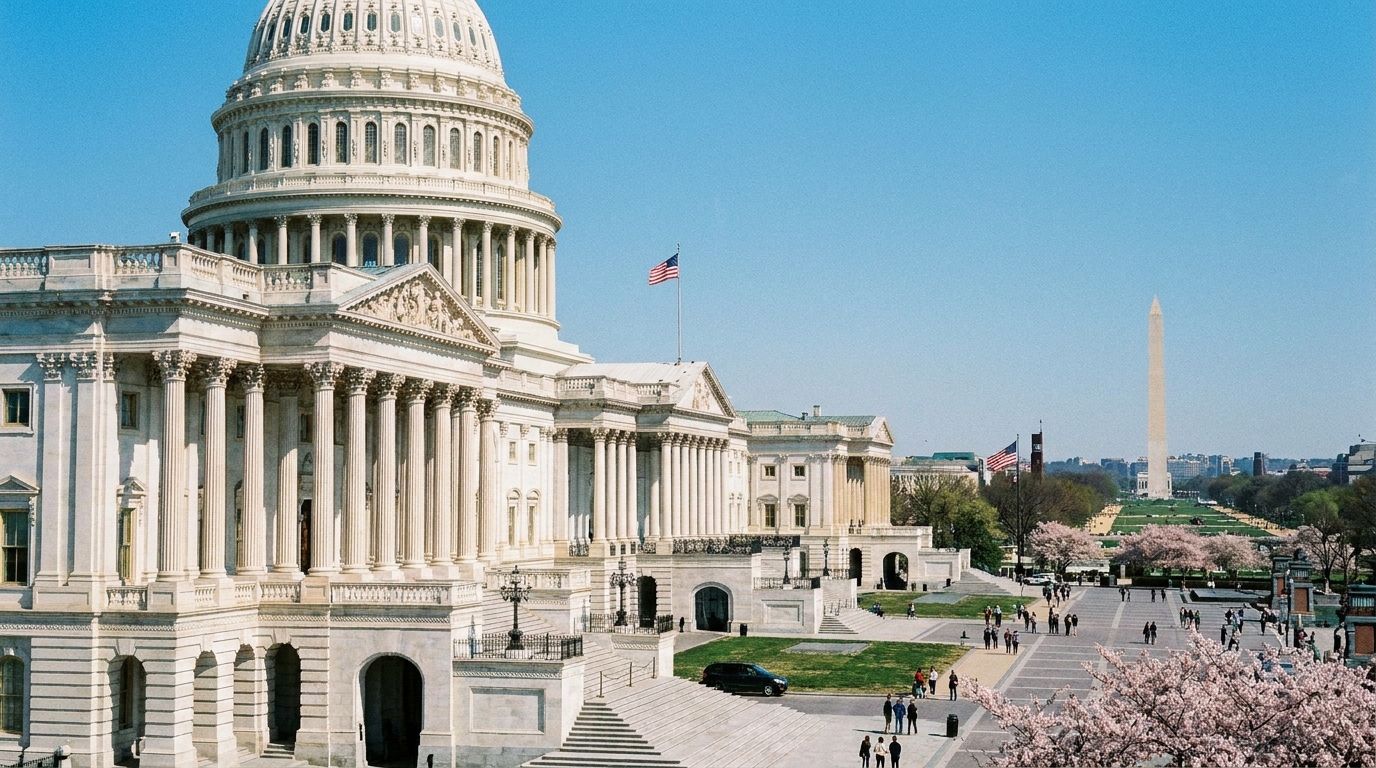
30 Apr 2012To paraphrase my beloved, It’s not that I’m a pessimist. It’s that I’m practical. It’s why I am not alarmed by reports spinning the questioning of the Justices as signs in favor or displeasure with Arizona’s S.B. 1070. While it would be wonderful to say goodbye to parts of the anti-immigrant law that birthed others, it would not change federal law which essentially functions in the same way.
In the coverage of last week’s hearing, organizations and media outlets tried to feel out what side the Justices were leaning towards based on the questioning. Interestingly enough there was no consensus as to what the line of questioning meant. Some organizations felt that the questioning revealed a sympathy towards Arizona State Law. Others expressed concern about the absence of a discussion of race within the questioning. Some sources predicted a mixed result, with some provisions of S.B. 1070 standing while others would not. Very few sources that I saw were able to muddle through the complicated proceedings in a way that was honest and went beyond advocacy for a specific outcome.
S.B. 1070 is a horrible law but let me be super clear, while S.B. 1070 is absolutely about race, ethnicity, and nationality the Supreme Court is not deciding on if the law violates the civil rights or human rights of individuals. It is deciding on if four specific parts of the law attempt to carry out what the federal government should be doing, enforcing immigration policy. If the case were about racial profiling, then national immigration enforcement policy and practice would also end up being scrutinized. This would include the excessive force of border patrol along the southern border, this would include the use (or not) of prosecutorial discretion, and the enforcement priorities of national programs like Secure Communities. To admit that S.B. 1070 is racist and relies on racial profiling, would mean to admit that policing priorities overall across the county are racist and rely on racial profiling. It is troubling to see liberal institutions insist that racial profiling is out of character for the United States when really it has been a hallmark.
A ruling is expected in late June.
7:50 am By Maegan La Mala · arizona|Immigration|Justice|Politics · 4 Comments
23 Apr 2012
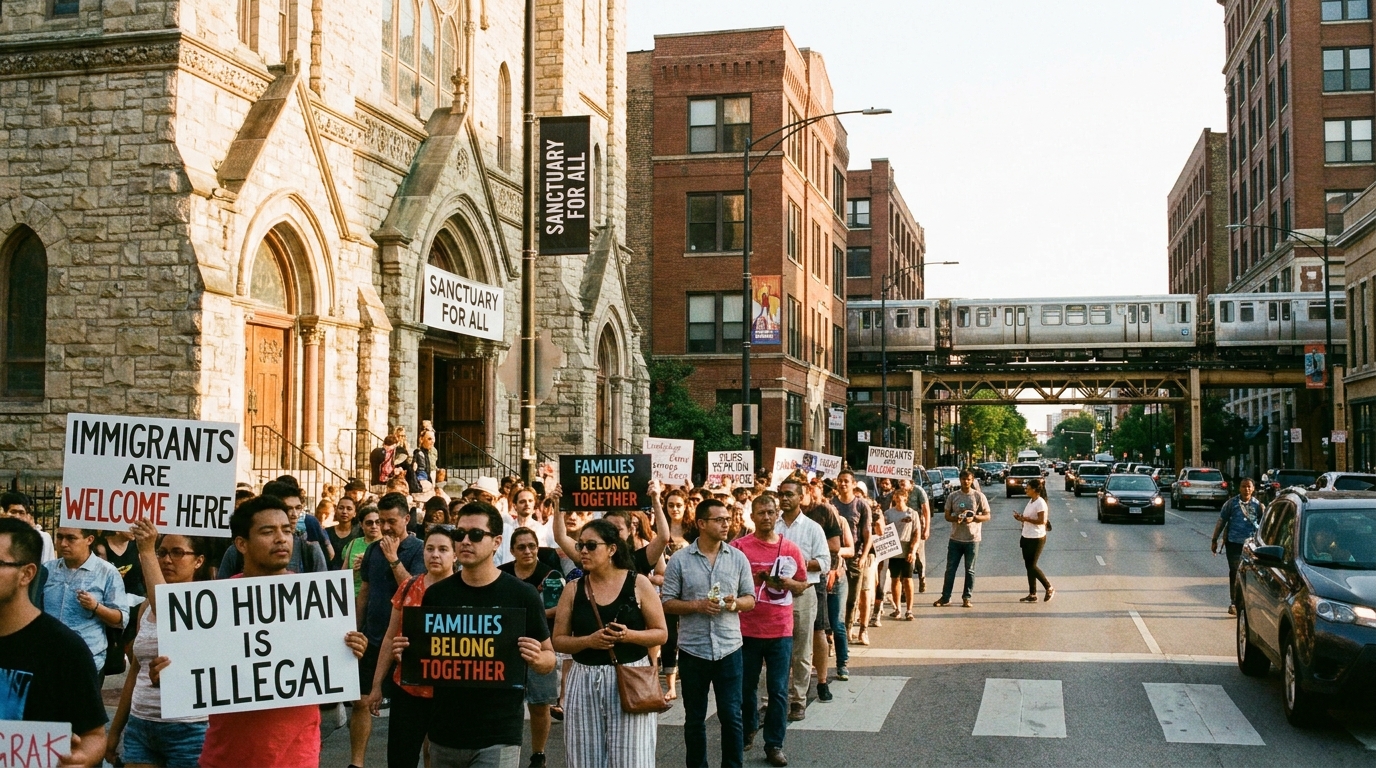
Arizona’s S.B. 1070 has been pushed back against since it’s creation. There have been marches, rallies, acts of civil disobedience, boycotts, petitions, and lawsuits. This week attention turns to the Supreme Court who on Wednesday will hear if parts of the law, in effect since April of 2010, can be enforced by the state or if the law infringes upon a federal power, immigration enforcement. So far, four parts of the law have been blocked from being enforced because they, according to courts, clearly tread on what the federal government should be doing. These are the four parts that will be considered by the court. The court can strike down all four provisions, some, or none. The parts being considered are:
1. The requirement that all residents of the state, regardless of immigration status, be able to show proof of their legal status if a law enforcement agent stops them with a “reasonable suspicion” to
believe that they are undocumented.
2. The provision making it a state crime if a person cannot produce the proof of their immigration status.
3. The provision making it a state crime for a person to be looking for work or be working if they don’t have legal papers.
4. The provision authorizing law enforcement to arrest an individual without a warrant if the officer believes they have committed any offense that would make them deportable.
This is not a case about if the anti-immigrant law denies equal protection under the law for immigrants. This is not a case about the civil or human rights of immigrants. People should be clear that while yes, if the Supreme Court decides that S.B. 1070 indeed goes above and beyond what a state should be doing, it has the potential of stopping other copycat laws from moving forward in other states like in Georgia, Alabama, South Carolina and Utah. But that same court decision against S.B. 1070 will affirm the existence and enforcement of federal policies and practices that predated S.B. 1070, namely programs like Secure Communities. It is the federal government who will be arguing against S.B. 1070. So while a Supreme Court decision against S.B. 1070 could have a domino effect in terms of other state anti-immigrant legislation, it will not erase the climate of fear for the undocumented in the United States. That would take a real effort by the federal government to actually practice discretion when it comes to immigration enforcement priorities, something that honestly cannot happen while policies like S-Comm are pushed as part of immigration policy.
On Wednesday, there are events scheduled in Arizona and all over the country against S.B. 1070 and similar laws.
For a great resource on the Supreme Court S.B. 1070 case, visit the Immigration Policy Center.
10:32 am By Maegan La Mala · arizona|Immigration · Comments Off
1 Mar 2012Yesterday, a federal district court issued a ruling blocking Arizona from enforcing another portion of it’s anti-immigrant law, SB 1070. Specifically, the court found that parts of the law violated the first amendment rights of day laborers soliciting work on public streets.
In defending this portion of the law, the state of Arizona claimed that the purpose of the provision was to ensure traffic safety.
From the National Day Laborer Organizing Network’s Press Release on the decision:
“Not only is the exercise of free speech a crucial civil right,” declared the court, “Plaintiffs have shown that they and their members are being chilled from soliciting employment by the threat of enforcement” of the anti-day labor provisions.
This is the second recent victory for day laborers:
Last week, the Supreme Court declined to review a Ninth Circuit decision striking down on First Amendment grounds a Redondo Beach ordinance that criminalized day labor solicitation (Comité de Jornaleros de Redondo Beach v. City of Redondo Beach). The court’s ruling in Redondo Beach struck down the City of Redondo Beach’s anti-solicitation ordinance as a “facially unconstitutional restriction on speech.”
8:46 pm By Maegan La Mala · arizona|Casa Blanca Camino 2012|Immigration|Politics · 2 Comments
24 Feb 2012Originally I had no intention of watching the alleged last of the GOP debates . It was held in Mesa, Arizona which meant the anti-immigrant rhetoric would be amped up to pander to the local audience which included Sheriff Joe Arpaio. I ended up watching the debate because my partner said we should watch it together (how romantic).Also, Arizona is where the next big primary will happen this coming Tuesday.
I was right about the hateful narrative used against immigrants but I also watched and listened to a group of white men who seemed to be against everything, including each other.
The whole debate, poorly moderated by CNN’s John King, had a strange air about it. The Republican hopefuls appeared on stage and introduced themselves in a manner that would have been appropriate in a bad comic book. For example, Ron Paul knighted himself the “defender of the Constitution.” Someone get that man a cape.
The rest of the very long evening consisted of the candidates talking about everything they hate like spending money. Rick Santorum responded to the first question asked, regarding the national debt, saying that the only thing he wanted to spend money on was the defense department, everything else should be cut : medicaid, medicare, food stamps, and of course Obama Care, I mean healthcare, and education.
Applause followed by Mitt Romney and Santorum going back and forth at each other for a while about who was more fiscally conservative.
Ron Paul gets in on the Santorum bashing (the candidate, not the sexual liquid) by calling him a fake and especially targeting how Santorum was once a backer of No Child Left Behind and now was against it.
Mitt Romney mentioned his experience as head of the Salt Lake Olympic Organizing Committee so many times that I proposed a bobsled race instead of primary to determine the GOP candidate for president.
The most unsurprising portions of the night involved birth control and immigration, and within those topics, race.
All of the candidates made the issue of contraceptives one of choice, access, and liberties but for religious fundamentalists, not for people with a uterus. Access to contraception was blamed for the amount of children born out of wedlock, especially among “some people”. I wonder who those people could be?
:: looks around at her two kids with no daddy in sight::.
Oh wait. They mean me.
Those same some people,like me, are really poor, usually criminals,uneducated and a burden because of all the babies they had while not being married. Therefore the answer to poverty is marriage and no birth control. Sign me and my out of wedlock daughters up! Married people who use birth control are mythical creatures who must exist only in the realm of the liberal elites.
This discussion of the evils of birth control had one brief ray of light when Ron Paul clarified that the morning after pill is not the same as the abortion pill. I said that moment was brief right because then he entered into the bash Planned Parenthood portion of the evening.
Arizona, the home of SB 1070 and banned books, seemed to waiting for the four white men to unleash the anti-immigration vitriol. Governer Jan Brewer and Sherrif Joe Arpaio sat in the audience, almost as GOP guests of honor. All of the candidates spoke in favor of fences and more boots on the ground. All of the candidates lambasted Obama and his administration for suing Arizona and not doing enough to stop immigrants who were of accused draining the economy and coming for the welfare ride. Mitt Romney especially came down hard on the administration, which makes sense campaign wise, since the Democratic Party has been putting all of it’s eggs in the Latino vote basket hoping that they can keep or win support by making Romney the most anti-immigrant of all. Alternately, Florida GOP Senator Marco Rubio’s name was mentioned, as if to prove to any Latinos who were watching, that they were capable of acknowledging a Latino who they weren’t going to paint as the scapegoat for the U.S.’s ills.
Of course none of the arguments the GOP presidential wannabes presented are based in reality. No one mentioned how Obama has actually expanded Bush immigration enforcement policies and how thanks to those expansions there were more Border Patrol boots on the ground and record breaking deportation numbers. Florida Republican Senator Marco Rubio’s name was mentioned, as if to prove that they were capable of mentioning a Latino and had some credibility. Newt Gingrich, who at one point was being praised for his “common sense” approach to immigration policy, which boiled down to saying that family unification was important for “good” undocumented people and proposing a limbo status of undocumented but not deportable, reverted back to the standard nativist arguments and when asked to discribe himself in one word, Newt Gingrich cockily answered, “cheerful”.
12:53 pm By Maegan La Mala · arizona|Immigration · 10 Comments
13 Sep 2011This past weekend, when I received an email announcing that the National Council of la Raza (NCLR) was declaring the economic boycott of Arizona over, I admit that my first reaction was confusion.
I was confused because I didn’t remember the boycott solely being “owned” by any one organization. I was confused because I thought that the boycott (which I have been following and respecting as have my children) was supposed to remain in effect until the anti-immigrant law SB1070 was repealed. Did I misunderstand?
So I went back.
Various organizations and localities called for boycotts. No one can own an act of resistance.
The demand of the boycott was that SB1070 be repealed.
That hasn’t happened.
According to reports in the media, NCLR is cancelling the boycott because they feel that they have successfully discouraged other states from enacting similar laws (never mind not so successfully discouraging the president from his enforcement/deportation party). NCLR and other orgs are pointing the millions of dollars lost because of the boycott including the cancellation of conferences and conventions in the state. Additionally, The Arizona Republic says Phoenix Mayor Phil Gordon’s office sent NCLR letters last month asking it to end the boycotts and work toward immigration reform. Based on the official press release announcing the calling off of the boycott, it’s all about the money honey. Both the Arizona Hispanic Chamber of Commerce and the Greater Phoenix Convention and Visitors Bureau are quoted in the official release, talking about the importance of “getting back to business”.
I know I am not the only one confused by this decision. Certainly the boycott in and of itself is controversial. There is debate as to the effectiveness of such an action, just like there is debate as to the effectiveness of civil disobedience. What both boycotts and cd’s share in common is that on their own, they are useless. On a small scale, people not buying a Stone Cold Creamery ice cream cone or blocking a highway are meaningless unless they are connected in a real way to work on the ground for a long time. The work of protest is not supposed to be easy. That is why it is called struggle. And to clarify, work on the ground does not just mean funded policy promoting as is currently happening with across the board in the immigrant rights advocacy world. The immigrant “movement” at the moment has been completely co-opted by non-profit orgs and their funders. There is no direction while on our blocks deportations rise.
And then we wonder why we are unable to find a Latino “leader”.
And then we wonder why Latinos are criticized for being unable to create sustained actions.
I’ve gone from confusion to cynical anger at the state of “movement building”.
Does NCLR’s backing off the boycott mean their national convention will be in Phoenix next year?
2:29 pm By BiancaLaureano · arizona|Arts|Culture|Movies|Politics|society|youth · 1 Comment
22 Aug 2011Over the next few days be on the lookout for film reviews from our time at the NY International Latino Film Festival. A week of films from all over the world, it was difficult to choose when and which films to watch. Unfortunately, I could only check out three, but I’m glad I did!
We’ve shared the trailer to Precious Knowledge before, and I was very excited to see the film as part of the NY Latino Film Festival and one I could review. I attended the second of two screenings at the festival and there were about 50 people present. The producers, editors, and one young woman, Pricilla Rodriguez, whose father is detained since the passing of SB 1070, from the film were present for a question and answer period after the film. Check out the trailer one more time:
Read more…
9:41 am By Maegan La Mala · arizona|Immigration · 5 Comments
18 Apr 2011Publisher’s Note : I wanted to include this article to provide some context to a lot of what I saw in the Spanish language media over the past weekend regarding the injunction against parts of SB1070 in Arizona and the passage of a copycat bill expected to be signed into law this week in Georgia. The story is being framed as states defying the Federal immigration model. I urge all of our readers to note how what is referenced in the article below can be said of Federal programs like Secure Communities and 287(g). – Mala
New America Media, News Report, Valeria Fernandez, Posted: Apr 13, 2011
PHOENIX, Ariz.—The U.S. Ninth Circuit Court of Appeals on Monday upheld a federal judge’s decision to temporarily suspend key parts of Arizona’s SB1070, the law that making it a state crime to be an undocumented immigrant. The ruling is being celebrated by pro-immigration groups, but it offers little relief to immigrants.
“Everything remains the same,” said Raúl Cordero, an immigrant from Mexico and member of a Neighborhood Defense Committee in Phoenix. “There are still police officers out there that are implementing this law at their discretion,” he added.
Gov. Jan Brewer, a Republican, signed SB 1070 into law on April 23, 2010. The U.S. Department of Justice subsequently filed a lawsuit arguing that SB 1070 was pre-empted by federal law. And on July 28 of last year, four provisions of the legislation were prohibited from taking effect by Federal Judge Susan Bolton. Gov. Brewer appealed Bolton’s decision, only to lose by two-to-one in the Ninth Circuit Court.
One of the law’s suspended provisions, now upheld on appeal, would require police officers to determine the immigration status of a person they come into contact with based solely on the officer’s suspicion that the person is in the United States illegally. Another provision would make it a crime for people not to carry immigration documents to prove their legal status.
The other suspended provisions would allow police to arrest a person they suspect of being in the country illegally, and would criminalize undocumented immigrants who apply for a job or are employed.
“The question before us is not, as Arizona has portrayed, whether state and local law enforcement officials can apply the statute in a constitutional way,” says the appeals court decision ruling. “There can be no constitutional application of a statute that, on its face, conflicts with congressional intent and therefore is preempted by the Supremacy Clause.”
That is, the court found that Arizona lawmakers couldn’t reinterpret federal laws beyond what Congress intended.
Lydia Guzmán, president of Respect/Respeto, an organization that documents human and civil rights violations, described the decision as “a victory in court, but not a victory on the streets.”
“Police officers are still stopping people and taking them to immigration, and they are still being deported,” she said.
Cordero, a member of the PUENTE Movement, an organization that has funded over 30 neighborhood organizing groups in Phoenix, receives daily phone calls from family members of people who were pulled over for no reason or for minor traffic infractions.
“Since this law was signed, it was like they stabbed the immigrant community with a 10-inch knife,” said Cordero. The Bolton ruling pulled the knife out five inches, but we are still wounded.”
The Ninth Circuit Court’s decision, however, goes “beyond the arguments made by the Department of Justice,” said Dan Pochoda, the legal director of the American Civil Liberties Union (ACLU) in Arizona, one of the parties with pending litigation against SB 1070.
Pochoda explained, “(The appeals court) stated strongly that there’s no inherent authority for local law enforcement to enforce a federal, civil immigration law.” Reactionary anti-immigrant groups, he said, have argued that the state didn’t need SB 1070 to detain and deport undocumented immigrants.
Gov. Brewer said she is considering appealing Tuesday’s decision to the U.S. Supreme Court or asking for full review of the decision by the three-panel judge by the full Ninth Circuit Court. Most rulings are rendered by three-judge panels, but in some cases contested decisions are adjudicated by all 29 judges on the Ninth Circuit.
“I remain steadfast in my belief that Arizona and other states have a sovereign right and obligation to protect their citizens and enforce immigration law in accordance with federal statutes,” said Brewer, in an official statement. “Monday’s decision by the Ninth Circuit Court of Appeals to uphold Judge Bolton’s suspension of key provisions of SB 1070 does harm to the safety and well-being of Arizonans who suffer the negative effects of illegal immigration.”
SB 1070 has prompted lawmakers in Georgia, Florida and Alabama to consider enacting similar legislation.
“The decision should serve as a warning sign to other states that are considering whether or not to replicate Arizona’s SB 1070,” said Chris Newman, legal counsel for the National Day Laborer Organizing Network.
Luis Avila, president of the pro-immigrant Coalition Somos America, warned that SB 1070 does not represent the beginning and end of anti-immigrant law. Despite the recent defeat of five anti-immigrant laws in the State Senate, dozens of others are still under consideration in Arizona.
“There are huge implications for the passage of SB 1070. Hundreds of millions of dollars have been lost in the state due to passage of this law,” Avila said. Some studies estimate Arizona has lost close to $140 million in revenues connected to industries that thrive from tourism and state conventions, because of the impact of an SB 1070-inspired economic boycott of Arizona.
Avila said that the appeals court ruling is “a sign that our judicial system is defending the constitutionality of laws,” but that it doesn’t offer relief for those already affected.
In addition to the local and domestic organizations officially opposed to SB 1070, a number of foreign governments filed opinions with the court to express their disapproval of SB 1070. Among them are the governments of México, Argentina, Bolivia, Brazil, Chile, Costa Rica, Ecuador, El Salvador, Nicaragua, Paraguay and Peru.
9:21 am By Maegan La Mala · arizona|Immigration|Politics · 1 Comment
12 Apr 2011Yesterday, the 9th Circuit Court of Appeals refused to lift an injunction on the most controversial aspects of SB 1070, including the provision that required police to verify the immigration status of anyone they suspected of being undocumented, the show me your papers portion of the notorious law. The injunction is expected to stay in place until the Department of Justice lawsuit against SB-1070 is decided.
Salvador Reza of the Puente Movement responded, “SB 1070 and the on-going court battles could be avoided if the Obama administration simply ended its ICE Access contracts with Arizona. A simple stroke of the President’s pen could resolve much of the human rights crisis in Arizona. ”
And may I add, across the country. It’s important to remember that the federal lawsuit against SB1070 is based more on the idea that it is the job of the federal government to enforce immigration laws, than on the idea of racial profiling being a disgusting way to feed the prison system. And enforce the federal government has done (i.e Secure Communities).
The continuance of the injunction hopefully will also serve as a warning to states, like Georgia, that are pushing laws like SB1070, that these laws will be challenged by the legal system, but perhaps more importantly and less talked about, by our communities.
9:03 am By Maegan La Mala · arizona|Immigration|U.S.-Mexico Border · 7 Comments
1 Apr 2011When Secretary of Homeland Security Janet Napolitano visited the U.S./Mexico border at Texas last week, it was to assure people that the border is safe, thanks to the deployment of armed troops. Safety is relative however, and it seems is dependent on who you are, meaning your ethnicity and the perception of your legal status. Just ask the family of Carlos de la Madrid, a U.S. citizen who was shot in the back by U.S. Border Patrol while climbing a fence into Mexico. What happened echoes other shootings of young men at the border by Border Patrol, with reports of rocks being thrown being met with bullets. The video report below is valuable for the interviews with the widow of de la Madrid and an activist from Border Action Network, who point out the Border Patrol’s policy of shooting to kill and the often used justification for such action, illegal activity such as drugs.
12:55 pm By Maegan La Mala · arizona|Immigration|Justice · 1 Comment
21 Feb 2011VivirLatino is a proud endorser of the statement below.
The guilty verdict in the case against Shawna Forde is not justice, as it doesn’t bring little Brisenia Flores or her father, Raul, back from the dead. The verdict will not stop hate crimes, it will not stop the waves of anti-Latino and anti-immigrant laws being presented across the country. But yes we are watching, we are taking note and taking action(s).
From Presente.org
Thursday, February 17th, 2011, Tucson, Arizona – As Latinos and immigrant rights advocates from all over the United States applaud the guilty verdict in the trial of Shawna Forde – a leader of the hate-group Minuteman American Defense (MAD) convicted of murdering 9 year-old Brisenia Flores and her father Raul Flores – a strong message resonates throughout the nation: We Are Watching. We are watching those who provide a platform to promote hate-crimes and call on the media to be socially responsible by reporting the linkages between Forde’s proven extremism and that of extremist groups she represents.On May 2009, Forde and two accomplices – MAD Operations Director Jason Bush and local MAD member Albert Gaxiola – broke into the Flores’ home in the border town of Arivaca, Arizona. Without compunction, they shot Raul Flores, his wife Gina Gonzalez and their daughter Brisenia who screamed, “Please don’t shoot me!” before being shot twice in the head; Gonzalez survived the incident.Brisenia’s murder has galvanized the entire Latino community. This gruesome act reflects in the starkest terms the anti-immigrant, anti-Latino hatred promoted by extremist groups. Latinos – the fastest-growing and largest ethnic minority group in the U.S. – understand and experience the hatred gripping the United States. In response, Latinos and immigrant advocates are closely watching media outlets that provide a platform for hatred promoted by extremist groups like MAD and the Federation for American Immigration Reform – a group Forde represented on a PBS show, for instance.
The details revealed in the murder trial have touched us all in a deep and unique way; indeed, no one will forget Brisenia. These important details-the organized hatred, the dehumanization of Latinos, the utter disregard of a child’s innocence- reflect the deepening and mainstreaming of the most noxious and dangerous strands of hatred in the United States. The growth and expansion of this hatred moves us to continue efforts to make sure there are no more hate-crimes and to take action condemning those media outlets that help disseminate hatred.
We call on the all media to be socially responsible by, for example, reporting the intimate link between Forde’s proven extremism and that of extremist groups she represents, so that the intellectual authors of the anti-Latino, anti-immigrant industry that has been growing in the nation -and the violence they perpetrate- may be known, discussed and confronted with greater urgency.
Endorsed by:
America Para Todos, Houston, TX
America’s Voice Educational Fund, Washington, DC
American Association of Jews from the Former USSR, National
Brazilian Total Assistance, Inc., Massachusetts
CARECEN, Los Angeles, CA
CASA de Maryland, Maryland
Center for Media Justice, Nationwide
Central American Resource Center (CRECEN), Houston, TX
Chicano Consortium de Sacramento, Sacramento, CA
Coalición de Derechos Humanos, Tucson AZ
Cuentame, Nationwide
El Centro del Inmigrante, New York
FIEL Houston, Inc, Houston, TX
Florida Immigration Coalition, Miami, FL
Fresno Unit of the Brown Beret National Organization (FresnoBBNO), Fresno, CA
Georgia Latino Alliance for Human Rights, Atlanta, GA
Latino Leadership, Inc, Orlando, FL
LatinoPolitico.net, Nationwide
MinKwon Center for Community Action, New York
New Immigrant Community Empowerment, New York
New Mexico Media Literacy Project, Albuquerque, NM
New York Immigration Coalition, New York
OurNewAnahuac.net, Houston, TX
Ohio Action Circle, Ohio
Presente.org, Nationwide
Rockland County Immigration Coalition, New York
Salvadoran American National Network SANN, Nationwide
The Hispanic Community Dialogue of Virginia, Virginia
Virginia Coalition of Latino Organizations, Virginia
Vivir Latino, Nationwide
Voces de la Frontera, Milwaukee, WI
Westchester Hispanic Coalition, New York
William C. Velasquez Institute, Nationwide
VivirLatino is a daily publication published by Mamita Mala Media, dedicated to featuring all the latest politics, culture, entertainment of interest to the diverse Latin@ diaspora.
About | Advertise with us | Contact | Twitter