2:12 pm By Maegan La Mala · Alabama|Immigration|race · 1 Comment
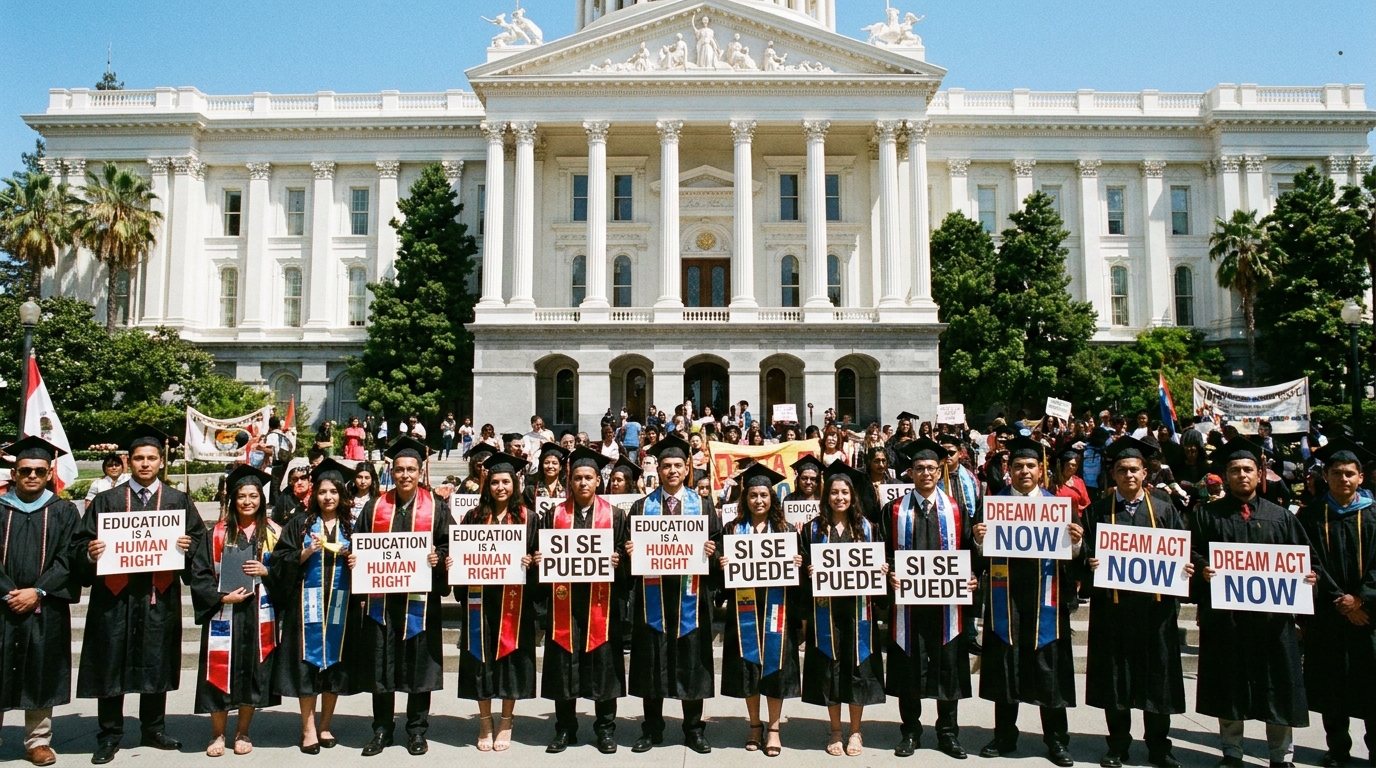
16 Feb 2012One of the many things that irks me about the way that social justice movements are promoted by nonprofits through to the masses is the use of the either/or lens. I have written extensively over the years about how this has played out in the context of immigration policy and practice struggles in the United States. Whenever a bill is up for discussion, the so-called “good” side, that is the Democratic Party, pushes this good immigrant/bad immigrant binary and non-profits, in an often misguided effort to keep themselves afloat and gain a victory, take this language as their own. We see it with the push for the DREAM Act and the various state in-state tuition namesakes. We see it with the push against criminalizing deportation programs like Secure Communities. Now we see it again in the fight against H.B. 56 in Alabama.
Passed in June of last year, the Beason-Hammon Alabama Taxpayer and Citizen Protection Act, or H.B. 56 is considered one of the harshest anti-immigrant laws in the United States. It requires schools to check and report the immigration status of their students and bars undocumented students from postsecondary education. It instructs police to demand proof of immigration status from anyone they suspect of being in the country without documentation, even on a routine traffic stop or roadblock. It also invalidates any contract knowingly entered into with an undocumented immigrant, including routine agreements such as a rent contract, and makes it a felony for an undocumented immigrant to enter into a contract with a government entity.
Hollywood director Chris Weitz, journalist Jose Antonio Vargas along with the Center for American Progress recently launched a campaign to repeal H.B. 56 called “Is this Alabama”. The accompanying report to the campaign, Alabama’s Immigration Disaster, focuses on the economic and civil rights impact of the law:
Overall, as Professor Samuel Addy of the Center for Business and Economic Research at the University of Alabama’s Culverhouse College of Commerce and Business Administration has illustrated, because of H.B. 56, Alabama could lose up to $10.8 billion (or 6.2 percent of its gross domestic product), up to 140,000 jobs in the state, $264.5 million in state tax revenue, and $93 million in local tax revenue.
These costs will all be incurred to drive out an undocumented population that is estimated to be only 2.5 percent of the state—a population that paid $130 million into the state’s tax coffers in 2010.
Alabama’s agricultural industry and foreign investment are especially affected. Chad Smith, a tomato farmer, estimates that he could lose up to $300,000 in produce because of the lack of farmworkers who are now fleeing the state. And recent embarrassing incidents such as the arrest of Mercedes-Benz and Honda executives under the provisions of the new law jeopardize the presence of foreign companies, which give the state both a significant amount of money and a significant number of jobs—percent of the state’s workforce in 2009, the most recent year for which data are available.
The campaign also features videos reflecting the personal, human impact of H.B. 56, asking people in Alabama their feelings about the law and framing the law in the context of the long struggle against racism in the state.
Check out one of the videos:
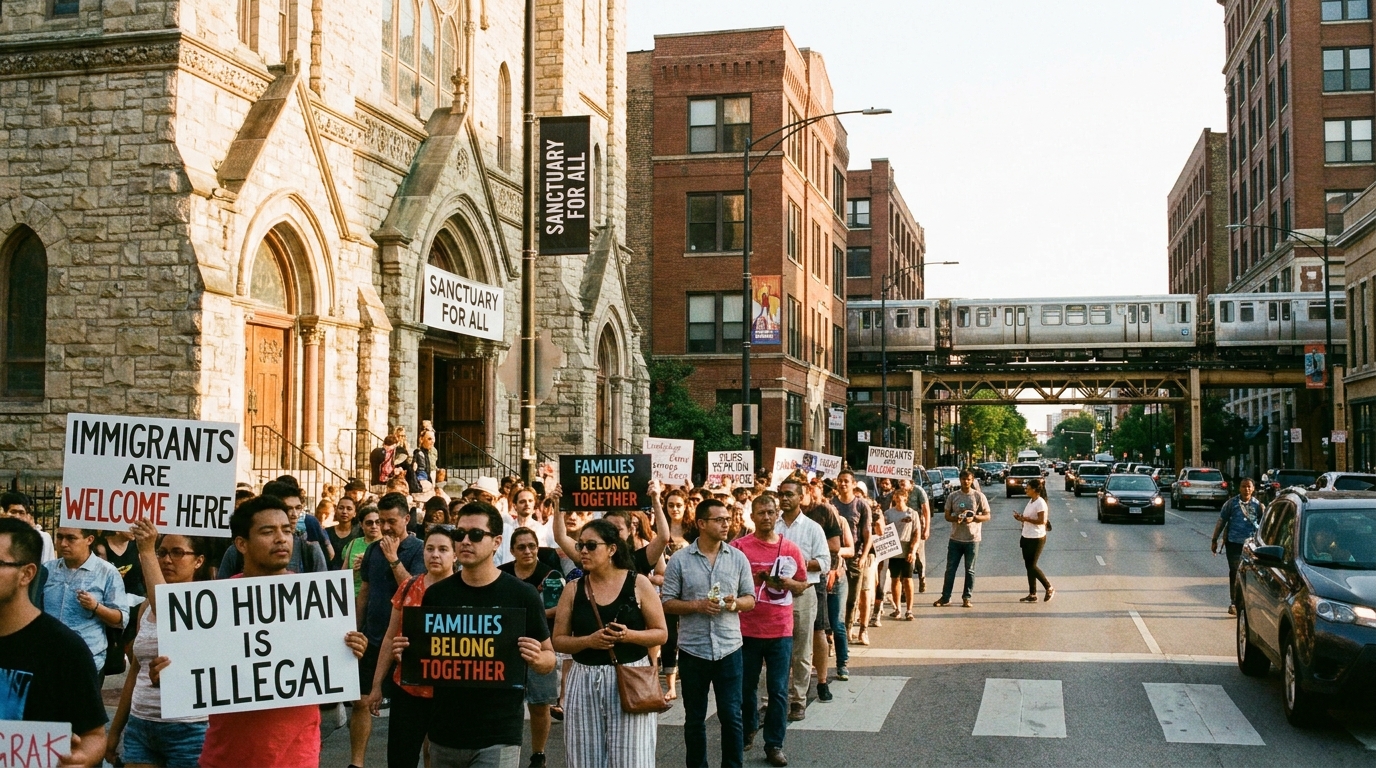
While repealing H.B. 56 is certainly something I am behind, I am concerned with framing issues of racism against blacks as something belonging to Alabama’s past – the United States’ past. Calling the struggle for equality and justice for all migrants the civil rights issue of our times implies that there is no more work to be done in terms of racism against blacks and the legacy of slavery in one state and across the country. All people have to do is look at the recently aired documentary Slavery by Another Name and look at who is being incarcerated and how to see that there is a hell of a long way to go when it comes to fighting racism. When racism is framed as either black or brown, real solidarity work is watered down. The reality is that the prison industrial complex that uses people of color bodies as raw materials is connected to the immigration criminalization complex.
So yes H.B. 56 is Alabama. It is the United States whose new budget features more money for Secure Communities. Failing to make the connections means we will continue to spread our resources too thin and be divided and conquered.
1:53 pm By Maegan La Mala · Alabama|Immigration|Politics|Secure Communities · Comments Off
9 Nov 2011Yesterday, almost civil and human rights organizations from across the United States, and a few international organizations, sent a letter to the Secretary of Honeland Security, urging her to stop deportation programs like 287(g) and Secure Communities in Alabama. Many of the signatories, including the American Civil Liberties Union (ACLU), had already been calling for a stop to the policies that currently are deporting about 400,000 people a year in the United States, but the recent implementation of what is being called the harshest anti-migrant law in the country is compelling many to focus on Alabama.
Secretary Napolitano is targeted because the successful implementation of HB 56 is contingent upon cooperation and participation of DHS as the state law relies on the department to take custody of non-citizens identified through HB 56 for detention and deportation. The groups also urged DHS to promote and enforce its own guidance which limits state action in immigration matters, as well as exercise favorable discretion in any case that arises from enforcement of Alabama’s HB 56.
HB 56 combined with ICE pattern and practices specifically threaten Latinos in the state. Since immigration is racialized as a latino issue, people who are perceived as Latino will be targeted. Racial profiling threatens the 185,602 Latinos in Alabama, a population that while making up only 3.9% of the total population according to the 2010 Census, increased 145% in the last decade.
The Department of Justice is currently challenging the constitutionality of HB 56, which went into effect in September. I signed onto to the letter to Secretary Napolitano, but with a healthy dose of cynicism in terms of expectations. The Department of Homeland Security through Napolitano continues to defend it’s deportation record and Secure Communities. The White House continues to defend Secure Communities. It will be interesting to see how the Federal Government, who has helped to create the anti-immigrant atmosphere surrounding states like Alabama, further reacts to the crisis in the state. Will the answer be a policy change or a public relations campaign.
Sources : New America Media
3:38 pm By Maegan La Mala · Alabama|Immigration · 3 Comments
2 Aug 2011Yesterday, the US Department of Justice file suit against the state of Alabama charging that HB 56, anti-immigrant legislation signed into law in June and slated to take effect on September 1, conflicts with federal law and undermines federal immigration priorities. The lawsuit also argues that the state law expands opportunities for police to push immigrants toward jail for various new immigration crimes.
HB 56 includes provisions that require local school districts to check and report on the immigration status of all children enrolling in public schools. It also transforms local police into federal immigration officers, and creates criminal consequences for anyone who provides housing, transportation, or employment to undocumented immigrants. HB 56 is considered one of the many Arizona SB1070 copycat laws that have been multiplying across the country, each meeting legal and community action in response.
Parts of SB1070 were effectively blocked, at least temporarily, by legal action, but it is interesting, at the very least, to try and reconcile the Obama administration’s lawsuits against anti-immigrant laws in Alabama and Georgia with it’s own policies. Federal deportation programs like Secure Communities and 287g deputize local law enforcement as ICE agents. So while these lawsuits are important and hopefully their success means more equitable living conditions and quality of life for immigrant communities. What these lawsuits do not do, is change the way the federal government has essentially abandoned all efforts of immigration reform and focuses on detentions and deportations.
6:53 am By Maegan La Mala · Alabama|Georgia|Immigration · 2 Comments
6 Jun 2011As more states legalize the already de facto anti-immigrant and anti-Latino practices that exemplify racial/ethnic profiling and a federal immigration policy focused on enforcement only, organizations are attempting to use the court system to push back.
Last week the American Civil Liberties Union and the National Immigration Law Center (NILC) filed a lawsuit against HB 87, the Georgia anti-immigrant law that authorizes police to demand “papers” demonstrating citizenship or immigration status during traffic stops, criminalizes Georgians who interact daily with undocumented individuals and makes it unjustifiably difficult for individuals without specific identification documents to access state facilities and services.
From the ACLU Press Release announcing the lawsuit:
The lawsuit charges that Georgia’s law, HB 87, is unconstitutional because it unlawfully interferes with federal power and authority over immigration matters in violation of the Supremacy Clause of the U.S. Constitution; authorizes and requires unreasonable seizures and arrests in violation of the Fourth Amendment; restricts the constitutional right to travel freely throughout the United States; and violates the Equal Protection and Due Process Clauses of the U.S. Constitution by unlawfully discriminating against people who hold certain kinds of identity documents.
The orgs behind the lawsuit hope that, like in Arizona, where portions of the the anti-immigrant SB 1070 law were blocked, courtroom attention combined with activism will push back and prevent other states from passing such laws.
Read more…
9:56 am By Maegan La Mala · Alabama|Georgia|Health|Mississippi|North Carolina|South Carolina · Comments Off
1 Dec 2008
Commemorating the 20th annual World AIDS Day, today at noon EST, the Latino Commission on AIDS will release a new report focusing on the state of HIV/AIDS prevention and care services for Latinos in the Deep South: North Carolina, South Carolina, Georgia, Alabama, Tennessee, Mississippi and Louisiana. The report, Shaping the New Response: HIV/AIDS and Latinos in the Deep South, follows 2 years of fact finding.
Date: Monday, December 1st
National Call-In Press Conference: 12:00 PM EST ( English and Spanish). Dial-in number (888) 387-8686 password 4615450
In-Person Press Conference: 1:00 p.m. EST (English and Spanish) Latino Commission on AIDS at 24 West 25th Street 10th Floor, New York City (Bet 6th Avenue & Broadway)
For more information and to arrange interviews, call
Guillermo Chacón (212) 920-1611 or gchacon@latinoaids.org (Spanish)
Tim Frasca (917) 689-9475 or tfrasca@latinoaids.org (English)
For more information visit The Latino Commission on AIDS.
1:00 pm By Jennifer Woodard Maderazo · Alabama|Health|Immigration · 1 Comment
12 Oct 2007That’s what an Alabama public health official said. Don Williamson said that a growing immigrant Latino population is bringing with them new cases of TB and chickenpox citing a 2006 statistic that out of the 53 reported cases of tuberculosis en Alabama, half of the infected were from Mexico of Guatemala.
But Williamson wasn’t saying this because he wants a crackdown on immigrants. According to him, he was saying just the opposite, that crackdowns on immigrants would lead to less of them seeking healthcare, creating problems for everyone.
Williamson also blamed immigrants for contributing to a rise in the infant mortality rate because many immigrants do not receive adequate prenatal care.
Via / Univision.com
10:00 am By Jennifer Woodard Maderazo · Alabama|Immigration|Justice · 1 Comment
3 May 2007
Last week six men were arrested accused of being part of the Alabama Free Militia plotting a machine-gun attack on Mexicans. During the arrests federal police recovered truckloads of explosives and weapons, including 130 grenades, an improvised rocket launcher and 2,500 rounds of ammunition. Yesterday five of those arrested were denied bail and the sixth man was granted a $10,000 bond. The charges? No, not terrorism but a pretty weak charge of conspiracy to make a firearm, which carries a maximum penalty of five years in prison and a $250,000 fine.
Now how much you wanna bet if the arrestees were Mexicans the charges would be a little different.
Via / The Decatur Daily and Democracy Now
VivirLatino is a daily publication published by Mamita Mala Media, dedicated to featuring all the latest politics, culture, entertainment of interest to the diverse Latin@ diaspora.
About | Advertise with us | Contact | Twitter