Advertisement

Archive for the ‘Immigration’ Category

Despite efforts by local and national advocates and activists, the Secure Communities deportation program will go into effect in New York and other states tomorrow.

S-Comm is a Department of Homeland Security program that requires states to identify immigrants for deportation. While NY governor Cuomo and other governors across the country have expressed concerns regarding the difference between what how DHS says the program is implemented and what statistics show regarding the deportation of non-criminal undocumented immigrants. There have been mixed messages and allegations of a cover up regarding the mandatory nature of the program. The intense roll out of the program despite complaints and protests seems to make the mandatory nature of the program clear.

Given the latest report of racial profiling by the New York City Police Department which showed that 87 percent of those stopped were blacks and Latino, the implementation of S-Comm especially in urban areas with large immigrant populations is extremely concerning. Immigrants account for more than one-third of the city’s residents and 29% of all voters in New York.

While the federal government attempts to make an example of Arizona by challenging parts of SB1070 in the Supreme Court and by suing Maricopa County Sheriff Joe Arpaio for racial profiling, it continues to fast track a program that has contributed to racial profiling.

Post to Twitter

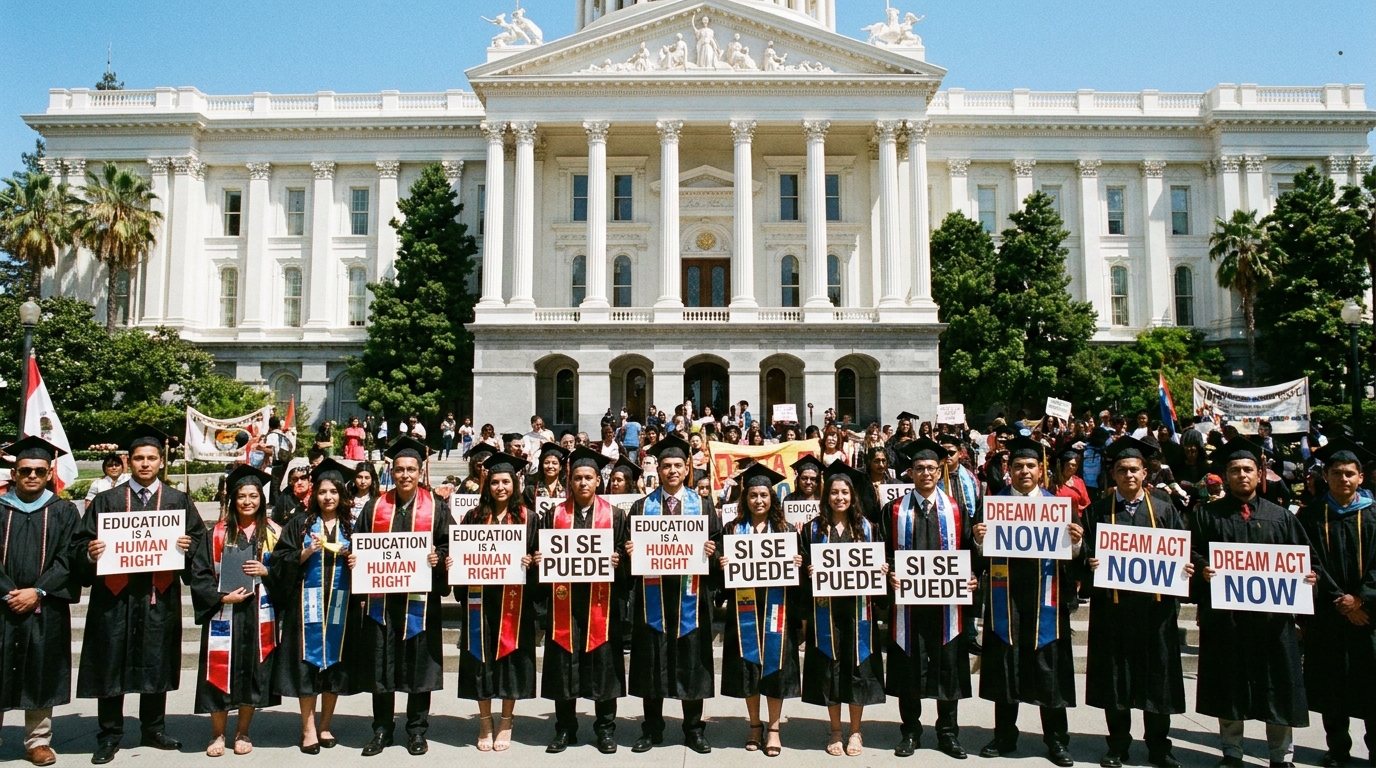
On Tuesday May 1, while thousands marched across the country for worker rights, especially immigrant worker rights, the New York State Assembly decided not to invest in the education of undocumented youth.  The New York State legislature passed the New York State Dream Fund, which would set up  up a commission to raise private scholarships for undocumented students. A.8689B is hardly a DREAM come true.  The fund will make family tuition accounts available to anyone who provides a valid taxpayer identification number. These accounts allow for systematic savings coming out of the pocket of immigrant families who already pay millions of dollars in taxes and reap little benefit from the state they live in. The New York State Dream Fund doesn’t take a cent from the state. In other words, the state told undocumented youth who want to go to college, we hope your families, who statistically earn less than others, can put something aside for you. If not – oh well.

What local undocumented youth and allies are fighting for is The New York State Dream Act. The NYS DREAM Act would have extended state- sponsored financial aid to all students, regardless of citizenship status. Through this act, all students would have been given an equal opportunity to financial assistance, specifically the Tuition Assistance Program (TAP).

For information on how you can help continue the push for equal access to state education funds for undocumented youth see after the jump.


Read more…

Post to Twitter

Advocates, organizations, individuals and the federal government all knew it was a sham from jump. The Department of Homeland Security (DHS) created a task force that went around the country hearing testimony and protests regarding the Secure Communities (S-Comm) deportation program. That task force issued a report last September saying that S-Comm threatened police community relations and therefore needed to be reformed, suspended or terminated. Last week, in what should come as a surprise to no one, Immigration and Customs Enforcement announced one tiny tweak to the program. ICE says it will no longer put people in deportation proceedings arrested solely on a minor traffic violation as long as that person has no prior criminal history. Deportation will happen after a conviction.

Many organizations have released statements expressing outrage that ICE ignored the recommendations of it’s own task force, but really this should come as a surprise to no one. Ever since the program’s expansion under President Obama, it has been a driving force behind the over a million deportations that have taken place under his administration. The program has been highlighted as proof of Obama’s tough boots on the ground policy that contradicts numerous promises and press releases indicating discretion.

Post to Twitter

To paraphrase my beloved, It’s not that I’m a pessimist. It’s that I’m practical. It’s why I am not alarmed by reports spinning the questioning of the Justices as signs in favor or displeasure with Arizona’s S.B. 1070. While it would be wonderful to say goodbye to parts of the anti-immigrant law that birthed others, it would not change federal law which essentially functions in the same way.

In the coverage of last week’s hearing, organizations and media outlets tried to feel out what side the Justices were leaning towards based on the questioning. Interestingly enough there was no consensus as to what the line of questioning meant. Some organizations felt that the questioning revealed a sympathy towards Arizona State Law. Others expressed concern about the absence of a discussion of race within the questioning. Some sources predicted a mixed result, with some provisions of S.B. 1070 standing while others would not. Very few sources that I saw were able to muddle through the complicated proceedings in a way that was honest and went beyond advocacy for a specific outcome.

S.B. 1070 is a horrible law but let me be super clear, while S.B. 1070 is absolutely about race, ethnicity, and nationality the Supreme Court is not deciding on if the law violates the civil rights or human rights of individuals. It is deciding on if four specific parts of the law attempt to carry out what the federal government should be doing, enforcing immigration policy. If the case were about racial profiling, then national immigration enforcement policy and practice would also end up being scrutinized. This would include the excessive force of border patrol along the southern border, this would include the use (or not) of prosecutorial discretion, and the enforcement priorities of national programs like Secure Communities. To admit that S.B. 1070 is racist and relies on racial profiling, would mean to admit that policing priorities overall across the county are racist and rely on racial profiling. It is troubling to see liberal institutions insist that racial profiling is out of character for the United States when really it has been a hallmark.

A ruling is expected in late June.

Post to Twitter

The criminalization of immigrants in border states like Arizona has been in the news this week since the Supreme Court today begins hearing the U.S. federal government make the case that parts of Arizona’s S.B. 1070 step on the toes of national enforcement and therefore should be nixed. Not so much in the news is the way that federal policy has contributed to that criminalization and in fact has led the way by militarizing the Mexico U.S. border with deadly results.

Two years ago Anastasio Hernandez Rojas was killed by border patrol agents. You can find our original post about it here. At the time of his death, DREAMers in New York City were holding a hunger strike in front of Senator Schumer’s Manhattan office. Today, there is no DREAM Act, no New York Dream Act, and no justice for Anastasio Hernandez Rojas and the family he left behind. What we do have two years later is more hard evidence that the border patrol agents responsible for the death of a father and a husband acted brutally.

Last Friday, the PBS news series, Need to Know, in partnership with the Nation Institute, aired an investigation on the use of excessive force by U.S. border patrol agents. In this episode there is video evidence that 42 year old Hernandez Rojas was beaten. On his hospital deathbed, he is bruised. Eyewitness video features graphic heartbreaking screams of the father of five pleading for his life. Never before released eyewitness video shows a dozen or so border agents standing over and around Hernandez Rojas handcuffed and hogtied on the ground being tased five times. Not in the video, evidence of Hernandez Rojas being aggressive and violent as claimed by officials.

Although the official cause of death on Hernandez Rojas death certificate is homicide, the names of of those involved remain unknown. There is currently no investigation.

Far from being a one off, eight people have been killed along the border over the past two years at the hands of the largest police force in the U.S., border patrol agents. In all the cases there were no investigations. No trials and certainly no convictions. In fact according to the report, when the ACLU filed a Freedom of Information Act request for information regarding Border Patrol policy and procedure on the use of force, specifically taser and deadly force, the response was useless blacked out papers. Is this the additional “boots on the ground” border policy that Obama so proudly proclaims? Is this what is being argued in favor of by a Department of Justice who is defending its right to enforce immigration laws while arguing against state laws like S.B. 1070?

I am not denying the horrible nature of state anti-immigrant legislation which impacts the daily life of all Latinos. But I will also not ignore the spirits of the dead like Anastasio, Sergio Adrian Hernandez Güereca, the spirits of the women sexually assaulted on the border by law enforcement, and Ramses Barron Torres – all crying for justice.

Post to Twitter

It’s time to woo the Latinos! It’s time to woo the Latinos!

According to Michael Scherer in TIME:

 “When we consider the impact of Latinos in 2012, we are looking at a swing between about a 20% vote share for Republicans and a 45% vote share. The question that follows is how much of an impact this swing will have on the final electoral college results. The polls that really matter are state-by-state surveys, not national ones. Latinos are expected to make up about one in ten voters this year, but many of those votes, in big states like Texas, California and New York, will have no impact on the electoral college, since those states are not in play for Romney. But Latinos can have a big impact on the outcomes in Colorado, Arizona, Nevada and Florida, and a marginal impact in states like North Carolina and Ohio, all of which both parties will contest.”.

In other words game on. While the immigration issue may not be the most important to all Latinos, it is one that many care about for ourselves, our families, and our loved ones. It’s a political litmus test of racial politics beyond black and white. The call has gone out and both parties are upping their game by reviving dead immigration horses and even hitching their hopes to new ones.

Republicans love to remind Latinos that we’re just like them, based on stereotypical assumptions on issues like LGBTQ rights and abortion. Moving away from morality a bit this election season, the GOP is sing the promise of a potential brown vice-president, Florida Senator Marco Rubio, who made the rounds on the Sunday morning political pundit television shows and the novel approach of challenging Democratic inaction on immigration reform by pushing various pared down versions of the DREAM Act.

The Democrats are approaching the Latino vote in three ways. One, by pouring money and energy into massive voter registration and get out the vote campaigns. Two, by repeating the promise of immigration reform and three, by pointing out how bad Republicans have been and will continue to be for the Latino community.

Last week Latinos for Obama officially relaunched, complete with a newish tag line : Estamos Unidos. There is nothing novel in the outreach which focuses on Latinos as the backbone of the alleged economic recovery. Of course there is mention of fixing the broken immigration system and taking a swipe at GOP versions of the DREAM Act, a mention of offering a pathway to citizenship to those who came into the U.S. as children.

Recently in an interview with Univision (of course- this a promise not to be made in English), President Obama promised, again, that if he were reelected he really would push for comprehensive immigration reform in the first year of his second term. Problem with the promise, besides that he made the same exact promise back in 2008 and didn’t keep it, is that Obama has already excused eventual failure. In that same Univision interview, Obama said that while he would push for comprehensive immigration reform in his second term, the Republicans (cue evil music) would kill it, especially Republicans like his likely opponent, Mitt Romney.

With Mitt Romney emerging as the likely GOP presidential nominee, liberal think tanks, non-profits, and advocacy orgs have joined with the Democratic Party in attacking what the Republican ticket would look like with junior Florida Senator Marco Rubio as it’s Vice-presidential pick. The Center for American Progress Action Fund recently released an issue brief ominously titled, “Nightmare Ahead: What a Romney-Rubio Presidency Would Mean for Immigration.”. One thing that immigration advocates and activists should be concerned about, according to CAP, is that both Romney and Rubio seem to love E-Verify, a flawed internet-based work-authorization system and that both would push for mandatory nation-wide use. While CAP accurately points out the problems with E-Verify, including error rates that misidentify workers authorized to work as not and vice versa, what isn’t mentioned is how the current Secretary of Homeland Security Janet Napolitano voted to make E-Verify mandatory in Arizona. 

Also under attack from the Democrats and their supporters is the GOP DREAM Act. While no actual piece of legislation has been drafted, what Senator Rubio has proposed in statements is a DREAM Act like bill that would allow young undocumented people brought into the United States by their parents some sort of legal status but no path to citizenship. This proposal has rankled many within the immigration advocacy world who took up the DREAM Act as their pet cause after it became clear that President Obama was not going to keep his campaign promise of comprehensive immigration reform. Democrats and allied orgs are quick to point out that Republican senators overwhelmingly voted against the DREAM Act coming to the floor back in 2010. What many undocumented young people have countered with is how some Democrats also voted against the DREAM Act in that procedural vote and that since then the Obama administration has offered nothing save an increase in detentions and deportations. In other words, something is better than nothing and it certainly is better than living in fear of being arrested and deported. Likely GOP presidential candidate Romney has cubically spoken out against the original DREAM Act but He did say that he would support a military only version, like Republican David Rivera’s ARMS Act and has indicated that he is not opposed to a something like what Rubio is suggesting. Not all immigrants wants to be citizens and certainly that’s not a path that anyone should be forced to go on, but critics worry about the creation of second class non-citizens who are able to live and work in the United States but not vote. And because it is election time, it’s all about the vote, voters, and would be voters.

The proof however goes beyond words. We need to see what an actual GOP DREAM Act would contain and see if the Obama administration makes any real attempts at slowing down the detentions and deportations. 


Post to Twitter

Arizona’s S.B. 1070 has been pushed back against since it’s creation. There have been marches, rallies, acts of civil disobedience, boycotts, petitions, and lawsuits. This week attention turns to the Supreme Court who on Wednesday will hear if parts of the law, in effect since April of 2010, can be enforced by the state or if the law infringes upon a federal power, immigration enforcement. So far, four parts of the law have been blocked from being enforced because they, according to courts, clearly tread on what the federal government should be doing. These are the four parts that will be considered by the court. The court can strike down all four provisions, some, or none. The parts being considered are:

1. The requirement that all residents of the state, regardless of immigration status, be able to show proof of their legal status if a law enforcement agent stops them with a “reasonable suspicion” to
believe that they are undocumented.

2. The provision making it a state crime if a person cannot produce the proof of their immigration status.

3. The provision making it a state crime for a person to be looking for work or be working if they don’t have legal papers.

4. The provision authorizing law enforcement to arrest an individual without a warrant if the officer believes they have committed any offense that would make them deportable.

This is not a case about if the anti-immigrant law denies equal protection under the law for immigrants. This is not a case about the civil or human rights of immigrants. People should be clear that while yes, if the Supreme Court decides that S.B. 1070 indeed goes above and beyond what a state should be doing, it has the potential of stopping other copycat laws from moving forward in other states like in Georgia, Alabama, South Carolina and Utah. But that same court decision against S.B. 1070 will affirm the existence and enforcement of federal policies and practices that predated S.B. 1070, namely programs like Secure Communities. It is the federal government who will be arguing against S.B. 1070. So while a Supreme Court decision against S.B. 1070 could have a domino effect in terms of other state anti-immigrant legislation, it will not erase the climate of fear for the undocumented in the United States. That would take a real effort by the federal government to actually practice discretion when it comes to immigration enforcement priorities, something that honestly cannot happen while policies like S-Comm are pushed as part of immigration policy.


On Wednesday, there are events scheduled in Arizona and all over the country against S.B. 1070 and similar laws.


For a great resource on the Supreme Court S.B. 1070 case, visit the Immigration Policy Center.

Post to Twitter

There seems to be much confusion out there about who Puerto Ricans are politically speaking, what their immigration status is in the United States, and what language they speak. It’s very easy to blame Republican hate speech and ignorance and fail to look at the bigger picture of the big c word most people don’t want to mention when talking about la isla del encanto : colonialism.

So as a Rican, not claiming to speak for all of Ricankind, I wanted to clarify a few points.

Puerto Ricans are U.S. citizens

Members of the Southern Mississippi University band chanted, “Where’s your green card?” at a Puerto Rican Kansas State player during their NCAA Tournament game against Kansas State University (source)

Puerto Ricans are citizens of the United States no matter if they are born within the 50 states or on the island of Puerto Rico. In 1917 the Jones–Shafroth Act collectively made Puerto Ricans citizens as well as giving us a very useful (sarcasm) Resident Commissioner who is a non-voting member of the U.S. House of Representatives. We do not need green cards. We have social security numbers and US passports. If we live within the 50 states we can vote for president. If we live in Puerto Rico we cannot. This make our immigrant experience unique in a number if ways, but it clearly does not protect us from racism or xenophobia. My own grandparents’ apartment in New York was raided by la migra in search of papers and our community has been impacted by the criminalization of Latino immigrants as demonstrated by the deportation of a Puerto Rican in 2008.

(Most) Puerto Ricans Speak English
As the GOP presidential candidates campaign in Puerto Rico, where residents can vote in primaries but not in the general election, recently Rick Santorum made a statement regarding the island’s political future.

Now put aside for a moment the English only nativist subtext and acknowledge that Puerto Ricans on the island are taught English. Do most Puerto Ricans on the island speak Spanish? Yes and they are well within their right to do so. As of 2007, the American Community Survey states that 95.1% of island residents speak Spanish and 81.5% of Puerto Ricans speak English less than “very well”. 4.7% of people on the island speak English only. It should be noted that there has been previous backlash in Puerto Rico against the idea of an English language requirement for statehood or an English language requirement in general. Puerto Ricans are extremely proud of their culture including their unique version of Spanish just as a NYRican I am very proud of my official language of Spanglish.

While it has been wonderful to see people in the media correcting the misconceptions about Puerto Ricans. I have yet to see anyone put these misconceptions within a colonial context. It needs to be acknowledged that the reason so many candidates stump on the island is not out of interest in changing the political status of the island, a commonwealth aka colony and recognized as such globally including by the United Nations, but rather as a way to earn Puerto Rican voters inside of the United States. Many are pointing to the upcoming plebiscite or non-binding vote on the island’s status that will occur while the U.S. presidential elections are happening. It’s hard not to choke on the irony of the exercise of democracy, however flawed, inside the 50 states while a farcical glorified opinion poll happens inside a country occupied by the U.S. for over 100 years.

I understand the confusion. When Puerto Rico is taught about in U.S. schools, it is not called a colony and it is not explained how the relationship between the U.S. and the island actually works in terms of political representation, voting rights, taxes, language, and culture. It isn’t explained how Puerto Rican migration happens nor how Rican bodies served as guinea pigs for the birth control so many women in the US are fighting to maintain access to.

One cannot look at the high unemployment numbers inside Puerto Rico, the poverty, the drug trade, police brutality and corruption without looking at how the local economy was decimated during Operation Bootstrap to give U.S. companies tax breaks on the backs of Rican men and woman, many who were forced to migrate to the United States. That is how my family arrived in NY.

But let’s keep ignoring the fact that the US has a colony and let’s engage in the joke of the GOP campaign, egged on by Tea Party island Governor Luis Fortuño. That’s a punchline that requires no papers and no translation.

Post to Twitter

Last week a number of immigration advocacy organizations in Washington D.C. filed a lawsuit against the Department of Homeland Security seeking information regarding their Criminal Alien Program (CAP).

According to Immigration and Customs Enforcement, the CAP program provides ICE-wide direction and support in the identification and arrest of those immigrants who are incarcerated within federal, state and local prisons and jails, as well as at-large immigrants with criminal records. This is done through ICE presence in jails and prisons and initiating deportation proceedings against people convicted of criminal offenses. It’s important to note that CAP does not just look at undocumented immigrants but also green-card holders, short-term temporary workers and visitors with proper authorization,

The lawsuit filed by the American Immigration Council (AIC) and the Connecticut chapter of the American Immigration Lawyers Association (AILA) alleges that ICE also sweeps up individuals who have been arrested but never convicted of any crime, a violation of due process.
Specifically the two organizations are seeking responsive, non-exempt records regarding CAP under the Freedom of Information Act (FOIA).

While the federal government continues to expand another deportation program, Secure Communities, over the past five years alone, CAP has led to the arrest of more than a million people, and the program was implicated in approximately half of all removal proceedings in FY 2009.

From a press release announcing the lawsuit:

“Although CAP supposedly targets the worst criminal offenders, the limited information we have shows that this is not always the case,” according to Melissa Crow, Director of AIC’s Legal Action Center. “Like Secure Communities, this insidious program seems to target individuals with little or no criminal history for deportation and to incentivize pretextual stops and racial profiling.”

ICE claims that the CAP program saves money and resources but from fiscal years 2005 to 2009 the largest as well as the fastest growing segment of appropriated dollars went to ICE’s Detention and Removal Operations (DRO) office whose budget more than doubled (increasing 104%). While ICE has stated that the focus of the program is high risk violent offenders it wouldn’t be surprising to learn that this investment in criminalizing immigrant communities has increased under Obama as deportation numbers have increased across the board.

Post to Twitter

Yesterday, a federal district court issued a ruling blocking Arizona from enforcing another portion of it’s anti-immigrant law, SB 1070. Specifically, the court found that parts of the law violated the first amendment rights of day laborers soliciting work on public streets.
In defending this portion of the law, the state of Arizona claimed that the purpose of the provision was to ensure traffic safety.

From the National Day Laborer Organizing Network’s Press Release on the decision:

“Not only is the exercise of free speech a crucial civil right,” declared the court, “Plaintiffs have shown that they and their members are being chilled from soliciting employment by the threat of enforcement” of the anti-day labor provisions.

This is the second recent victory for day laborers:

Last week, the Supreme Court declined to review a Ninth Circuit decision striking down on First Amendment grounds a Redondo Beach ordinance that criminalized day labor solicitation (Comité de Jornaleros de Redondo Beach v. City of Redondo Beach). The court’s ruling in Redondo Beach struck down the City of Redondo Beach’s anti-solicitation ordinance as a “facially unconstitutional restriction on speech.”

Post to Twitter


Hola!

VivirLatino is a daily publication published by Mamita Mala Media, dedicated to featuring all the latest politics, culture, entertainment of interest to the diverse Latin@ diaspora.

About | Advertise with us | Contact | Twitter

VivirLatino on Facebook


blog advertising is good for you

blog advertising is good for you
  • Karen: Have you see the census figures for 2010? Latinos are not all that diverse. Most" Latinos" are Mexic [...]
  • Maegan La Mala: Hi Karen, I agree but only in part. I think that people do get up in cults of personality but th [...]
  • Maegan La Mala: I haven't heard anything about a rally being held Jose Luis. i know Presente.org is organizing a pet [...]
  • Karen: Also, Al Sharpton, now a host on MSNBC, brought attention to the Trayvon Martin case because he knew [...]
  • jose luis: when the rally is going to be held in SAn Diego..if there is on??? [...]

Get our RSS Feed!